AI Can't Validate Your Startup Idea: What It Can and Can't Prove in 2026
See what AI idea validation can research, what it cannot prove, and how founders should combine AI analysis with real customer behavior before building.
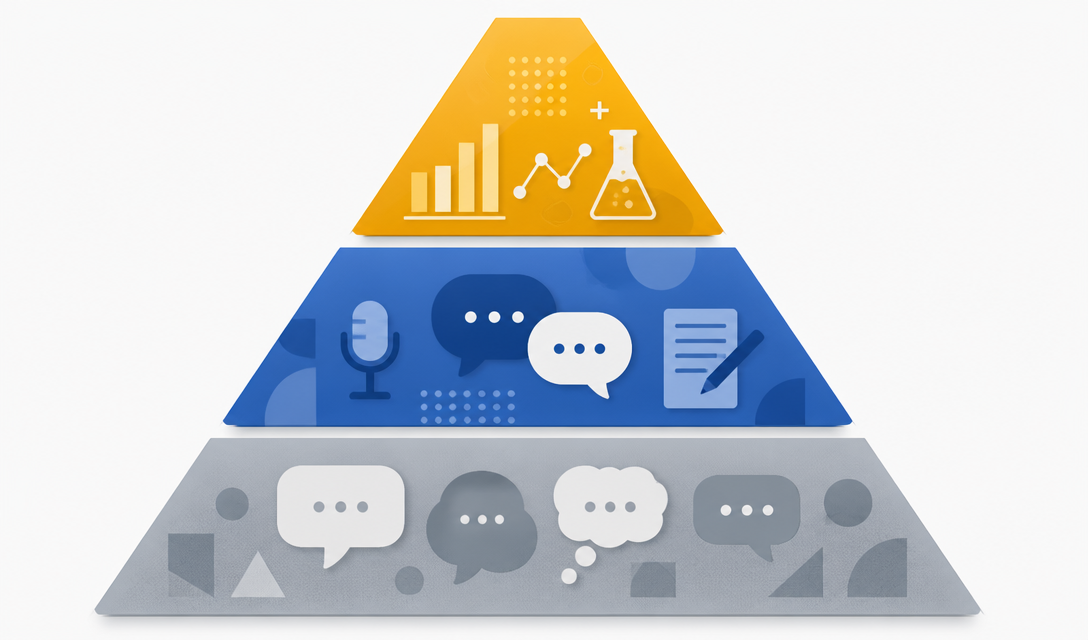
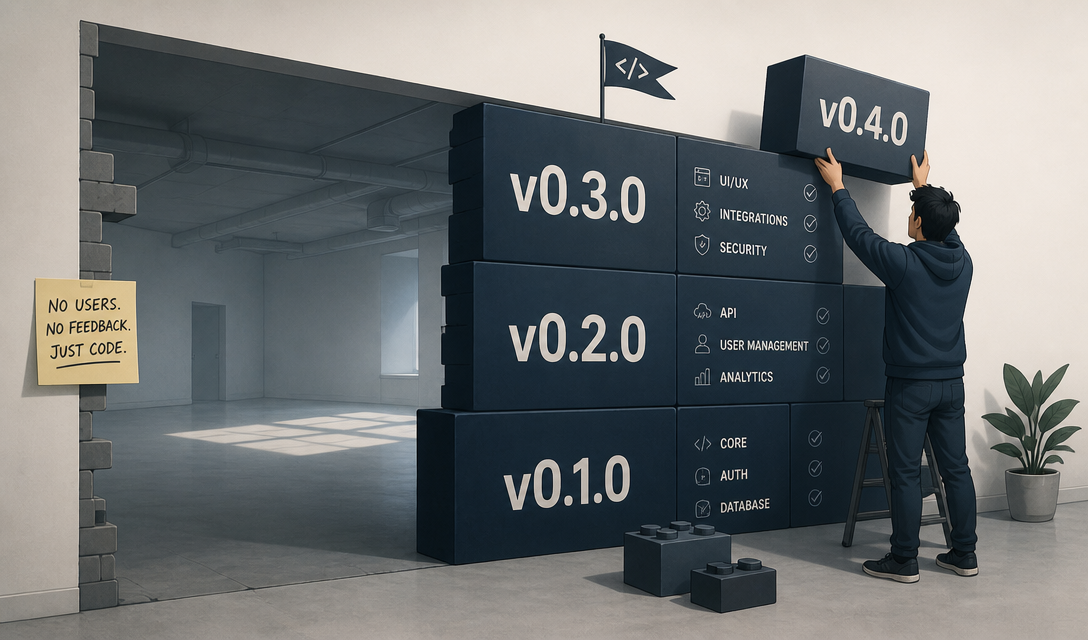
AI cannot validate a startup idea because validation ultimately requires external events: a real customer changes behavior, approves a budget, uses the product, pays, or returns. In 2026, AI can do much of the work around those events. It can search current sources, map candidate competitors, structure assumptions, challenge reasoning, synthesize interviews, and design sharper experiments. But generated analysis is not customer evidence, even when it is fluent, detailed, and cited.
That is not an anti-AI position. It is a boundary that makes AI more useful. Use the model for speed, breadth, and adversarial thinking. Use reality for commitment.
The useful answer is not yes or no
“Can AI validate my idea?” bundles several jobs into one word:
- understanding the idea and its assumptions
- researching a market and alternatives
- estimating risks
- simulating possible customer objections
- collecting actual customer evidence
- deciding whether the next investment is justified
AI can contribute strongly to the first four. It can organize the fifth when connected to real data. The sixth remains a founder decision grounded in the evidence and constraints.
Research agents have improved materially. OpenAI's deep research release PDF describes systems that search, analyze, and synthesize many sources into cited reports. The same document preserves important limitations: such systems can hallucinate facts, make incorrect inferences, struggle to distinguish authority from rumor, and calibrate confidence poorly.
Those limitations do not make research agents useless. Human researchers also miss sources and make bad inferences. The practical standard is traceability: Can the reader open the source, see what it supports, distinguish fact from interpretation, and find what remains unknown?
Anthropic's 2026 guide to evaluating research agents argues that research quality depends on the task and recommends checking groundedness, coverage, and source quality. That is exactly the posture idea validation needs. A market scan, a legal review, and a customer-discovery synthesis do not share one generic definition of “good research.”
What AI can do well
Turn a pitch into testable assumptions
Founders naturally compress a business into a solution sentence: “An AI agent that handles compliance for small clinics.” A model can unpack the hidden claims:
- small clinics experience the named compliance workflow often
- the current process is costly enough to change
- the buyer can delegate part of it to software
- required data is available with acceptable privacy
- the agent can reach the necessary reliability
- someone with budget can be reached economically
That decomposition is valuable because assumptions can be ranked and tested. It is reasoning support, not evidence that any assumption is true.
Search and compare public evidence
With web access, AI can find candidate competitors, current pricing pages, product documentation, reviews, regulations, job postings, community discussions, and market changes. It can build a comparison table faster than a founder starting from a blank tab.
The word “candidate” matters. Search results can be incomplete, stale, or misclassified. Verify the company exists, open the primary page, note the access date, and separate a product claim from an observed capability. “Vendor A markets automated audit preparation” is a sourced fact. “Customers trust it” does not follow unless evidence supports that conclusion.
Find contradictions and missing questions
AI is useful as an adversarial reader. Ask it to identify:
- a claim supported only by the founder's preference
- an alternative the competitor map omitted
- a buyer/user mismatch
- a dependency that makes delivery fragile
- evidence that would reverse the current verdict
- the strongest case for passing on the idea
Models can generate many objections, including irrelevant ones. Rank them by consequence and testability. The benefit is expanding the search space before commitment narrows your attention.
Design experiments and interview guides
Given one falsifiable assumption, AI can propose recruitment criteria, past-behavior questions, prototype tasks, landing-page variants, or a concierge test. It can also critique leading questions and define what a result cannot prove.
The experiment still needs a real participant and a threshold chosen before results arrive. A simulated answer may help you rehearse an interview; it cannot become one row in the customer evidence table.
Synthesize real customer data
When connected to interview transcripts, support logs, CRM records, analytics, or transaction data, AI can cluster themes, retrieve examples, compare segments, and flag contradictions. Here the underlying record is external evidence. The model is an analysis layer.
Preserve links back to the source record. Summaries can erase minority workflows or make weak patterns sound universal. Review samples, inspect outliers, and keep counts tied to a defined dataset.
What AI cannot prove
AI cannot prove a customer will:
- abandon an existing workflow
- give you sensitive data
- persuade a manager or procurement team
- accept the real price
- complete onboarding
- keep using the product after novelty fades
- recommend it when their reputation is at risk
These are not merely questions the model answers imperfectly. They are events that have not happened inside the model.
AI also cannot infer market size from a handful of anecdotes without a defensible sampling and estimation method. It cannot turn a competitor's marketing claim into usage evidence. It cannot make a nonrepresentative waitlist representative by analyzing it more elegantly.
This boundary becomes especially important with synthetic customers. A 2024 paper on LLMs for market research reports biases when LLM-generated consumer data naively substitutes for human responses and argues for using it as a complement within a framework that includes real data. A July 2026 preprint on synthetic consumer insights finds broad topical overlap with human responses alongside meaningful differences in language, structure, and how diversity is generated.
These studies do not settle every synthetic-research use. They support a conservative operating rule: use synthetic respondents to generate hypotheses, stress-test a script, or explore possible segments. Do not count their answers as target-customer demand.
Why false confidence is more dangerous than a bad answer
An unmistakably bad AI answer is easy to reject. A polished 30-page report with competitor logos, market numbers, personas, and a score can be more dangerous because it resembles completed diligence.
False confidence often enters through three transformations:
- Plausibility becomes fact. The model suggests that compliance teams struggle with a workflow, and the report states that they do.
- A source becomes proof of a different claim. A category-growth article is cited beside a claim about one buyer's willingness to pay.
- A score hides evidence quality. Nine assumptions receive numerical ratings and produce a precise-looking total.
The correction is not more cautious adjectives. It is provenance. Every decision-relevant statement should be a sourced fact, a visible inference, or an assumption awaiting a test.
Independent evaluations also remind us not to generalize from capability headlines. METR's task-completion time-horizon research measures frontier agents on software tasks at defined reliability thresholds. It is valuable evidence about those tasks. It is not evidence that a model can predict a startup market. Capability is empirical and task-specific.
The evidence-first AI workflow
Use this six-step workflow to keep speed without laundering uncertainty.
1. Give the model concrete context
Provide the idea, customer, trigger, current alternative, pricing hypothesis, constraints, founder access, and what you have already observed. Ask the model to identify missing context instead of filling it silently.
2. Build an assumption ledger
For each claim, record:
- claim
- why it matters
- current evidence
- source or record
- fact, inference, or assumption
- confidence and reason
- next test
Do not allow confidence to rise because the explanation became longer.
3. Research with source hierarchy
Prefer primary sources: official product pages, documentation, public filings, regulations, original studies, direct customer records, and current pricing. Use secondary analysis for context. Treat community posts as lived examples, not prevalence estimates.
Ask the AI to quote minimally, link directly, record dates, and show which claim each source supports. Open the important links yourself.
4. Ask for the disconfirming case
Request evidence and reasoning that would make the idea weaker:
- a well-funded incumbent with the same wedge
- a customer workflow that avoids the problem
- a regulation that blocks automation
- a buyer who benefits from the status quo
- a channel whose economics do not fit the price
This is where AI's breadth creates leverage. It can look beyond the founder's favorite narrative without needing to protect the founder's feelings.
5. Convert unknowns into external tests
Choose the weakest consequential assumption and ask: What must a real person do for us to believe this more?
The answer may be showing a recent workflow, sharing anonymized data, booking a second meeting with the buyer, joining a concierge trial, signing a budgeted pilot, paying, or returning. Our ranking of seven business-idea experiments helps distinguish stated intent from stronger commitment.
6. Let evidence change the verdict
End with Build, Revise, or Pass. Include the strongest evidence, strongest counterevidence, remaining unknown, and the next investment being authorized. Do not ask AI for a timeless judgment. Ask whether the current evidence justifies a specific next step.
Use AI to decide what reality must answer
The productive 2026 position is neither “AI knows the market” nor “AI has no place in validation.” AI is a research and reasoning multiplier. It can reduce hours of searching, expose contradictions, and turn an attractive pitch into a testable risk map. It can also generate unsupported certainty at the same speed.
Keep one line bright: when a claim concerns future customer behavior, the model can help design the question, but the answer must come from observed behavior.
Start with a complete pre-build validation method, use AI to accelerate the work around the evidence, and refuse to call the analysis itself proof. The goal is not to make AI the judge of your idea. It is to make the next encounter with reality harder to misread.