Why Your Product Failed Before You Wrote a Single Line of Code
Most founders treat marketing as something you do after building. The ones who succeed know it's the process of discovering what to build in the first place. Here's the framework they use.
You shipped something real. Told people about it. And then — nothing. No signups, no sales, no pull. Just the sound of your own expectations collapsing.
It's easy to blame the marketing at that point. "I just need to post more." "I need better SEO." "Maybe a Product Hunt launch will fix it."
But here's the uncomfortable truth: your product didn't fail when you launched it. It failed months earlier — before you wrote a single line of code. It failed when you decided what to build without discovering what the market actually needed.
The Trap Technical Founders Keep Walking Into
Angel Cee, an indie founder who's been through the cycle, put it bluntly: "Marketing is not what you do after you build. Marketing is the process of discovering what to build."
Read that again. It's not a semantic trick. It's a fundamental reordering of how products get made.
Most technical founders do the opposite. We configure CI/CD pipelines, set up monitoring, write tests — all before having a single conversation with someone who might pay for the product. As Angel puts it, "It's easier to configure CI/CD than it is to cold email 10 potential customers."
Why? Because CI/CD gives you a green checkmark. Cold emails give you rejection. One feels like progress. The other feels like pain.
But here's the thing: the green checkmark is lying to you. It's progress toward building, not progress toward a business. Those are not the same thing.
The Elegant Key Problem
Angel describes another pattern that's painfully common: founders build "elegant keys" before finding a "lock."
You've seen this play out. Someone spends six months building a beautiful product — polished UI, thoughtful architecture, edge cases handled. But when they finally show it to users, the reaction isn't excitement. It's confusion. The product solves a problem that doesn't exist, or solves it in a way the market doesn't care about.
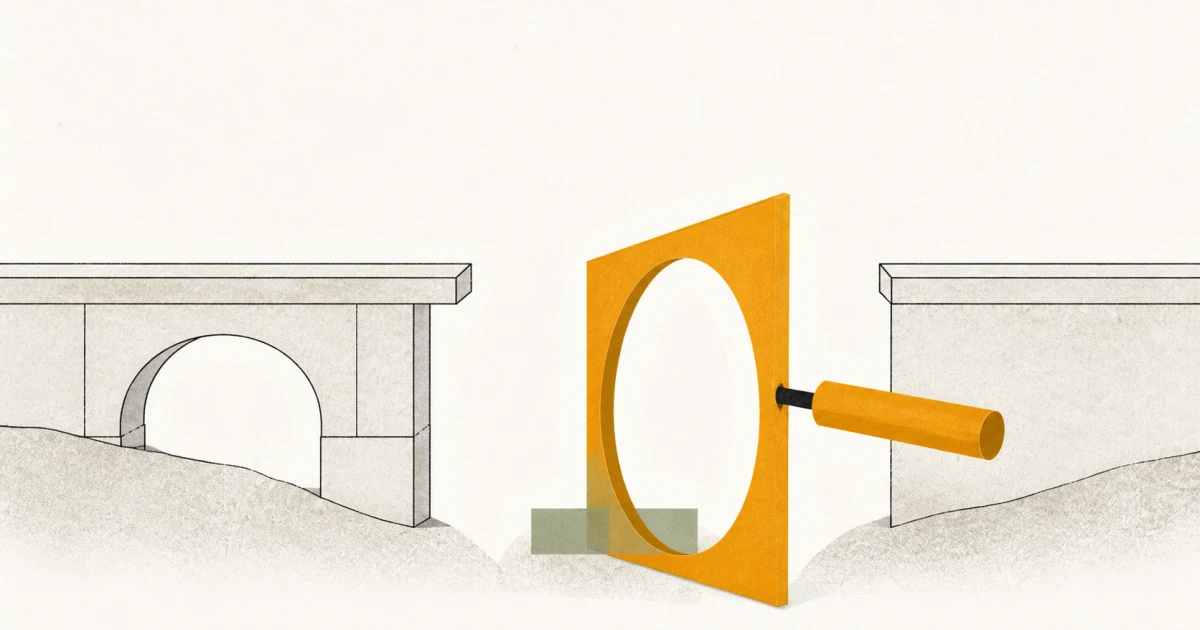
The key is elegant. But there's no lock it fits.
This isn't a failure of engineering. It's a failure of discovery. The founder fell in love with the solution before verifying the problem. And by the time they figured that out, they'd already invested months of their life.
What Broadcasting Looks Like (And Why It Feels Like Progress)
There's a related trap that's even sneakier: broadcasting instead of validating.
One founder on Indie Hackers shared a story that should make every solo builder pause. They built a health tool — the entire product, polished and complete — and then wrote 150 social media posts promoting it. A hundred and fifty. That's serious effort.
They got likes. They got engagement. They got zero sales. Zero clicks, even.
Why? Because they were broadcasting before validating. They'd never had a single real conversation with a target user. Not one person had watched them use the product or given honest feedback. The social media posts felt productive — they were doing something — but they were just a comfortable substitute for the terrifying work of watching a real person interact with what you've built and potentially reject it.
Posting is safe. Validation is vulnerable. That's exactly why founders confuse the two.
The Waitlist Delusion
If broadcasting is one trap, vanity metrics are another. A founder on r/SideProject described what happened when they launched:
200 people on the waitlist. Three signed up.
Not 30. Not 15. Three.
Their reflection is worth quoting: "'Signing up for a waitlist' and 'paying for a product' are completely different actions with completely different intent."
This is the distinction that separates wishful thinking from actual validation. A waitlist signup costs nothing — no money, no reputation, no real commitment. It's someone saying "this sounds interesting" while they scroll past. A purchase costs money and implies real need.
The most dangerous validation is when people say "great idea" but never open their wallet. If your validation doesn't cost the other person something — money, time, or reputation — you're not validating. You're collecting encouragement.
What Validation Actually Requires
So what does real discovery look like, practically? It's not complicated, but it is uncomfortable:
Define the buyer before anything else. If you can't describe exactly who has the problem and why they'd pay to solve it, you're not ready to build. ICP first, analysis second — that order matters.
Make validation cost something. Not for you — for them. A waitlist is free. A pre-order isn't. A 30-minute call costs time. A LinkedIn intro costs reputation. The signal quality goes up with the cost.
Talk to humans before you write code. Not surveys. Not social media polls. Actual conversations where you can hear hesitation, see confusion, and ask follow-up questions. Ten conversations will tell you more than a thousand impressions.
Distinguish evidence from opinion. "I'd use that" is an opinion. "Here's my credit card" is evidence. Supporters give opinions. Buyers give commitment. If someone can't show you where their data came from, it's just an opinion with formatting.
Watch for the Messy Middle. Angel identifies months 3–18 as the danger zone — novelty fades, progress becomes incremental, and the initial excitement that carried you through building evaporates. Most projects die here. The ones that survive are the ones where the founder validated the right problem before this phase started.
The Hardest Part
Validation isn't a step in your process. It's the process.
When Angel says "distribution is part of the product," they're not talking about marketing channels. They're saying that understanding how you'll reach customers — and whether those customers actually exist — is as fundamental to your product as the code itself. You can't bolt it on later.
The founders who make it aren't the ones with the best ideas. They're the ones who figured out, before they built anything, that someone would pay for what they were about to create.
If you're reading this thinking "I should have done this last time" — good. That recognition is the first real signal you've gotten all week.